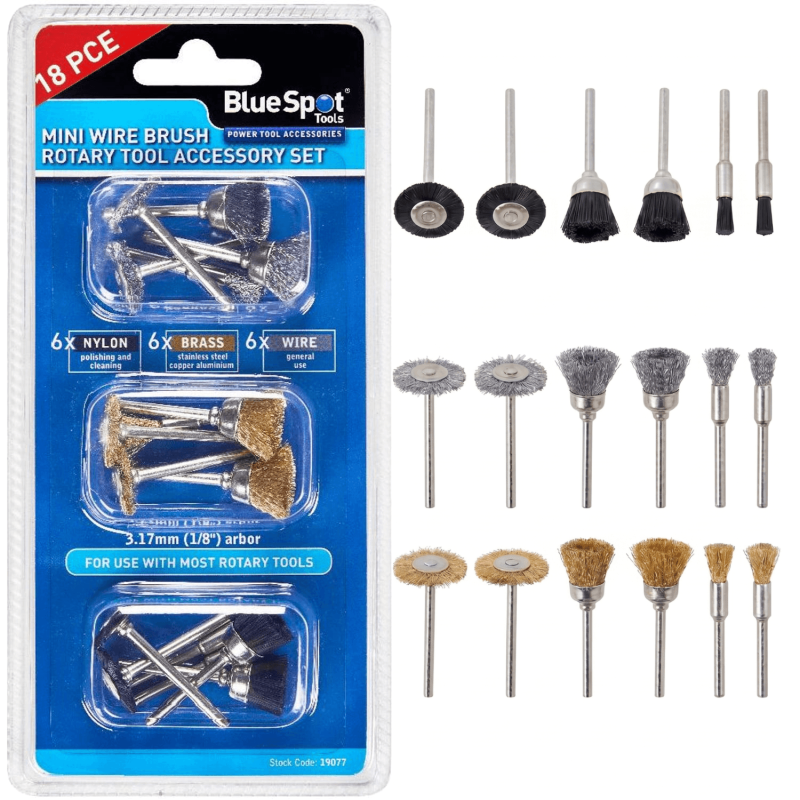
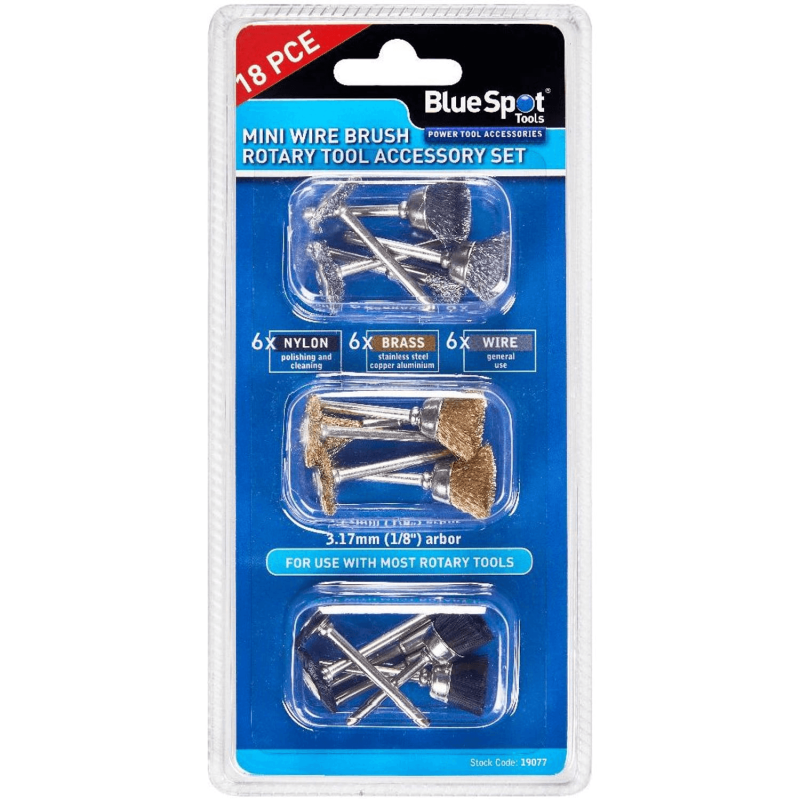
Blue Spot Tools 18 Piece Mini Wire Brush Rotary Tool Accessory Set
MPN: 19077
Barcode: 5028734190779
Size: 3.17mm (1/8") arbor
Weight: 0.1kg
Overview:
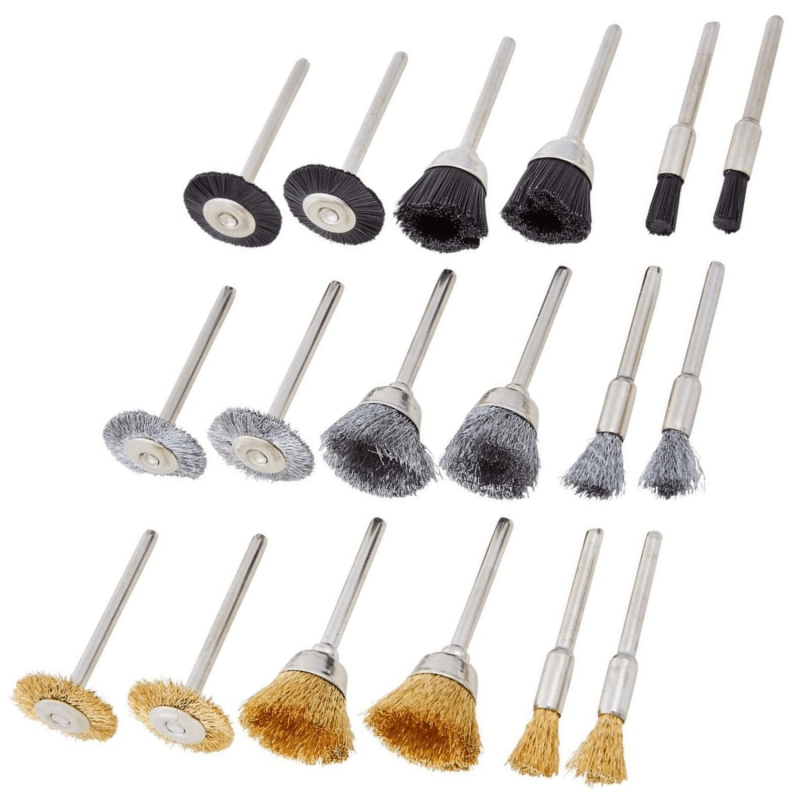
The Blue Spot Tools 18-piece mini wire brush set spans three brush materials - steel wire, brass, and nylon. Each type targets different cleaning or polishing tasks.
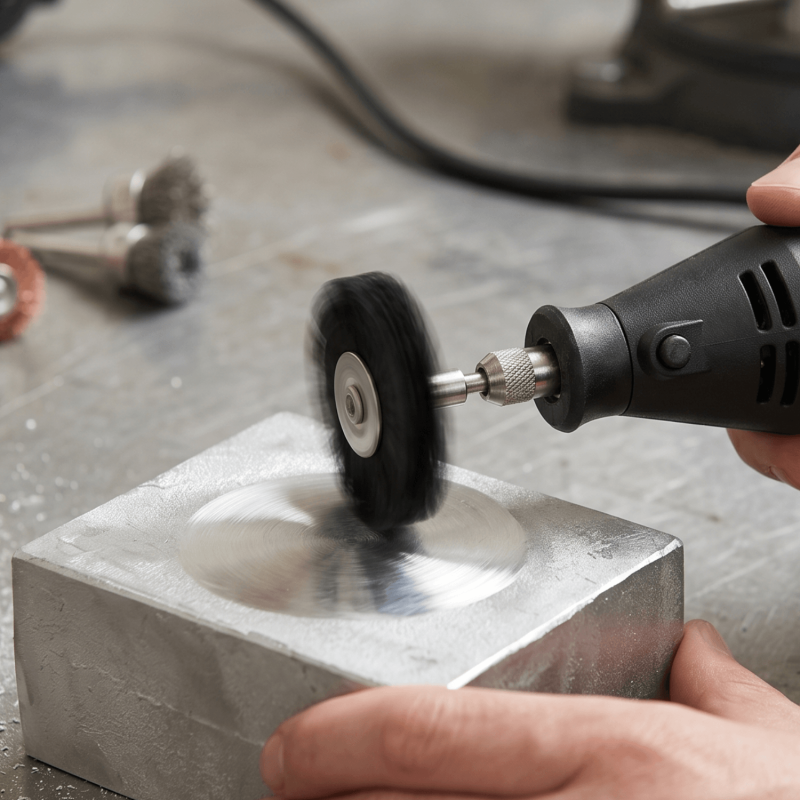
Steel wire brushes handle general surface preparation on ferrous metals. Brass wire brushes work on stainless steel, copper, and aluminium without scratching. Nylon brushes polish and clean without scoring the workpiece.
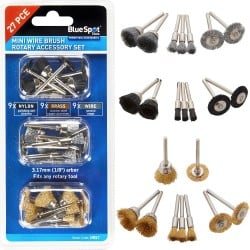
Three brush configurations run through all three materials: pencil brushes, cup brushes, and T-brushes. All 18 brushes carry a 3.17mm (1/8") arbor for use with most rotary tools.
What's Included
- Steel wire brushes: 6 Piece
- Brass wire brushes: 6 Piece
- Nylon brushes: 6 Piece
Key Features and Benefits
- Three brush materials in one set: Covers cleaning, deburring, and polishing tasks across different metals without needing separate sets.
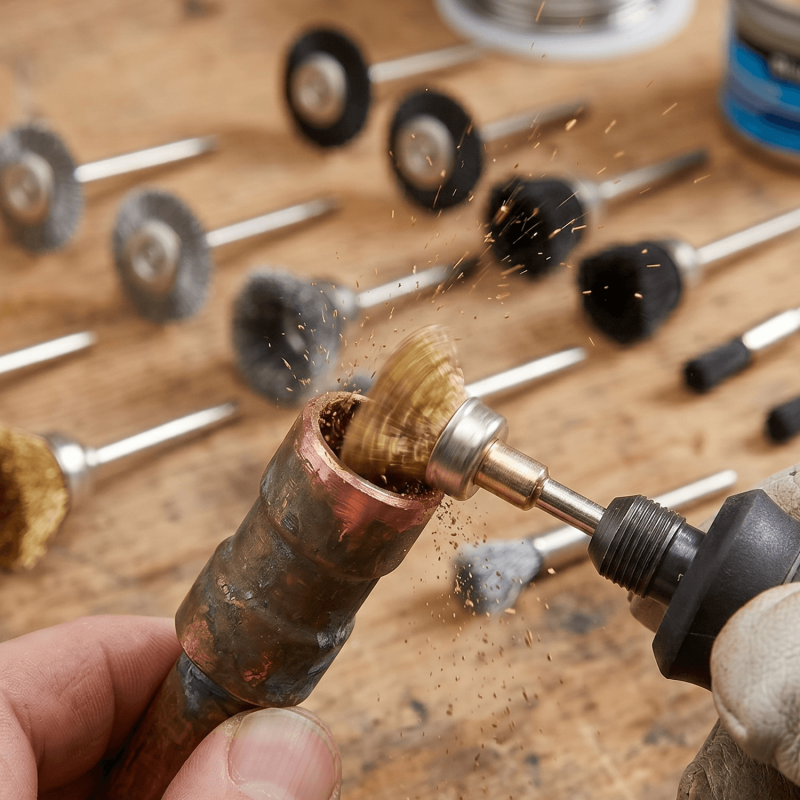
- Brass wire brushes: Clean stainless steel, copper, and aluminium without scratching or marking the surface.
- Nylon brushes: Polish and clean metal without scoring - suited to light finishing work where wire brushes would be too aggressive.
- Steel wire brushes: Handle general-purpose cleaning and surface preparation on ferrous metals.
- Three brush configurations: Pencil, cup, and T-brush shapes give access to flat areas, inside corners, and tight spaces.
Specs & Attributes
- Arbor: 3.17mm (1/8")
- Compatible with: Most rotary tools
- Brush configurations: Pencil, cup, T-brush
- Materials: Steel wire, brass wire, nylon
- Total pieces: 18
- Weight: 0.1kg
Typical Applications
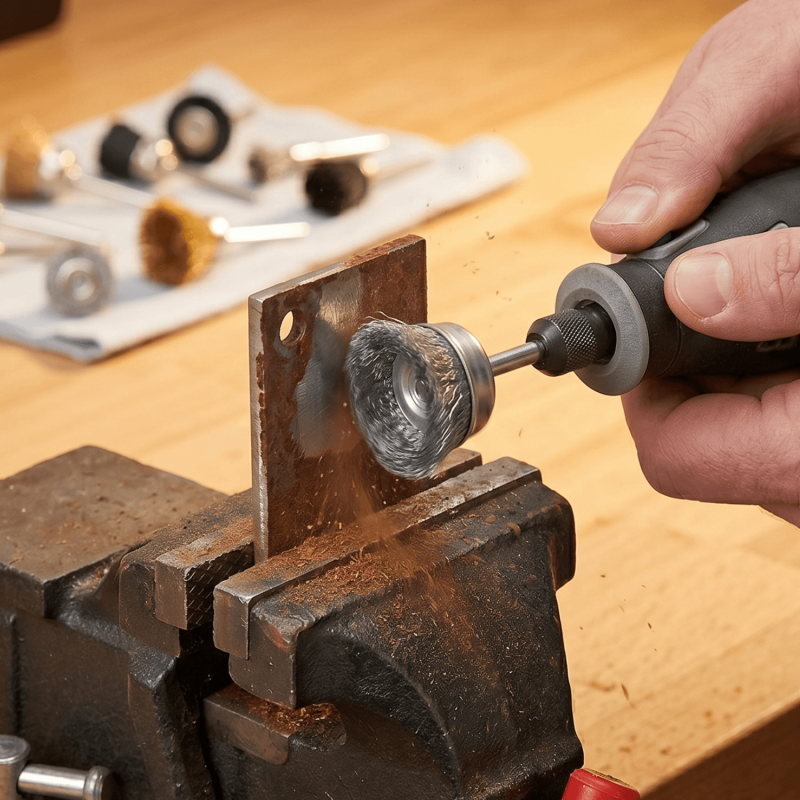
- Removing rust from steel and iron components
- Cleaning and deburring copper and brass fittings
- Polishing aluminium parts without surface damage
- Surface preparation before painting or coating
- Removing weld spatter and flux residue
- Cleaning electrical contacts and connectors
- Deburring metal edges after cutting or machining
- Spot cleaning in tight corners and narrow crevices
How to Use
Wear eye protection: Put on safety glasses before use - wire bristles can shed at speed.
Select the brush material: Choose steel wire for ferrous metals, brass for copper or aluminium, and nylon for polishing work.
Fit the brush: Insert the 3.17mm (1/8") arbor into your rotary tool's collet and tighten securely before switching on.
Start at low speed: Begin at a lower speed setting and build up gradually for better control.
Apply light pressure: Let the bristles work against the surface rather than forcing them down. Too much pressure shortens brush life.
Work in overlapping passes: Move the brush systematically across the area to cover it evenly.
Frequently Asked Questions (FAQs)
What is the difference between a brass wire brush and a steel wire brush?
Steel wire brushes are more abrasive and suited to ferrous metals. They remove rust, paint, and scale quickly. Brass brushes are considerably softer. They clean and deburr without scratching aluminium, copper, and stainless steel. Brass is also non-sparking, making it safer in environments where flammable materials are present.
Can rotary tool wire brushes remove rust?
Yes. Steel wire brushes remove surface rust when driven at speed by a rotary tool. The rotating bristle tips strike the metal repeatedly, lifting rust without significantly changing the surface profile. Wire brushes will not clog with material during use. Once bare steel is exposed, apply a rust converter or primer promptly - bare metal can begin to oxidise quickly in humid conditions.
What are cup, pencil, and T-brushes used for?
Cup brushes work flat against larger surfaces and inside corners. Pencil (end) brushes reach into narrow slots, holes, and confined spaces. T-brushes, also known as wheel brushes, work perpendicular to the surface and suit edge cleaning and smaller flat areas. Having all three shapes available means you can switch configurations to match the area you are working on.
Do nylon brushes scratch metal?
Nylon brushes are considerably gentler than wire brushes and will not score metal surfaces under normal use. They suit light cleaning, polishing, and finishing on metals, where a wire brush would be too aggressive. They are not designed for heavy rust removal or paint stripping - those tasks call for steel wire brushes.
What safety precautions are needed when using rotary wire brushes?
Always wear safety glasses or a face shield - individual wire bristles can break free at speed and act as projectiles. Wear gloves to protect against stray wire ends. Never exceed the maximum RPM rated for the brush. Keep the workpiece secured to prevent it from moving during use.
Summary
The Blue Spot Tools 18 Piece Mini Wire Brush Set covers three brush materials (steel wire, brass, and nylon) across pencil, cup, and T-brush configurations. A 3.17mm (1/8") arbor fits most rotary tools. Steel brushes handle general cleaning work, brass brushes suit softer and non-ferrous metals, and nylon brushes cover light polishing tasks.
| Data |
| Reference Code | 19077 |
| Size | 3.17mm (1/8") arbor |
| Contents | 6 x steel wire brushes | 6 x brass wire brush | 6 x nylon brush - (3 x pencil brush, 3 x cup brush, 3 x T brush in each material) |
| Weight | 0.1kg |
| Material | Steel wire | Brass wire | Nylon |